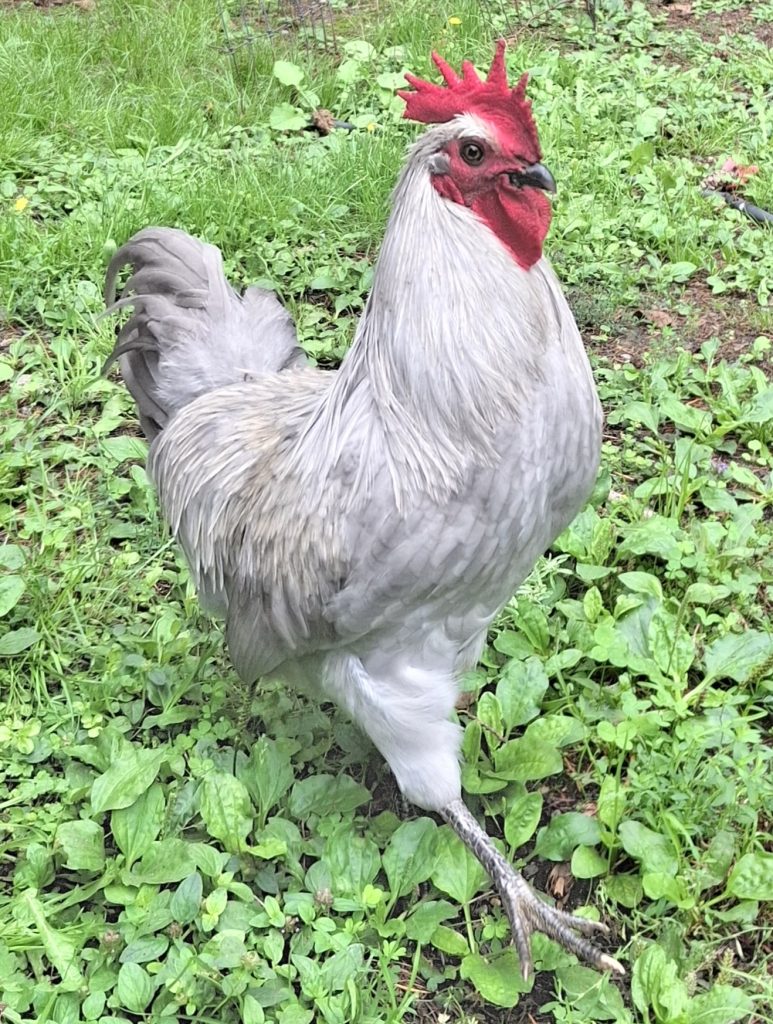
Building the legacy …. one day at a time …

Getting started with your own flock

The fastest way to find out is to call and ask.
Be curious. Ask a lot. Ask often.
And that goes for before and after you make a decision.

Your Journey begins with Your choice:

Which means you have to either:

But first, how to choose?


Hatching Eggs

Baby Chicks

Pullet Hens

Highlights
  • There is nothing like the experience.
  • See them grow inside the shell.
  • Bonding starts day one.
  • Need incubator & patience.
  • More room for error.
  • Longer wait time.
Pricing and constraints
  • $8 each, sold in multiples of three
  • Most common order is a dozen
  • Rule of thumb: 3 eggs makes 1 hen
  • Expected hatch rate is about 70%-80%
  • No shipping; it ruins hatchability
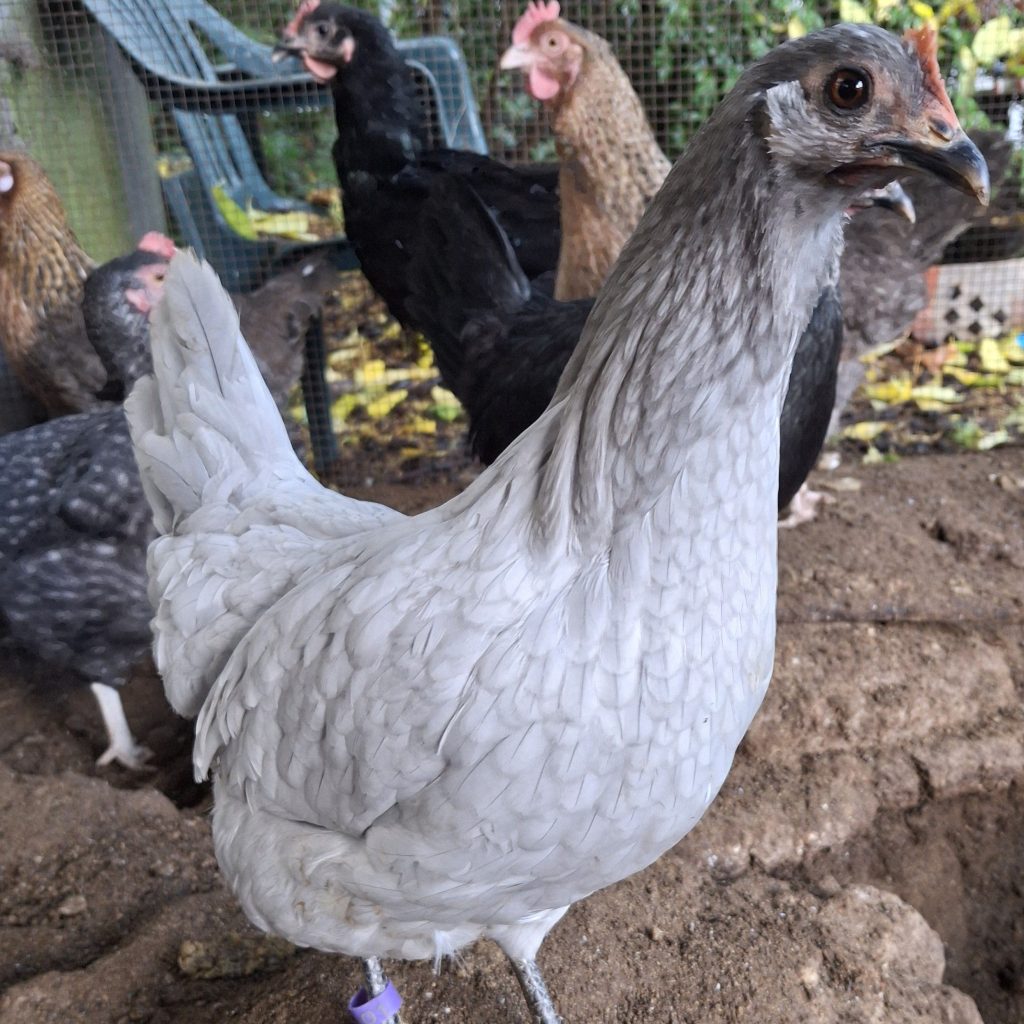
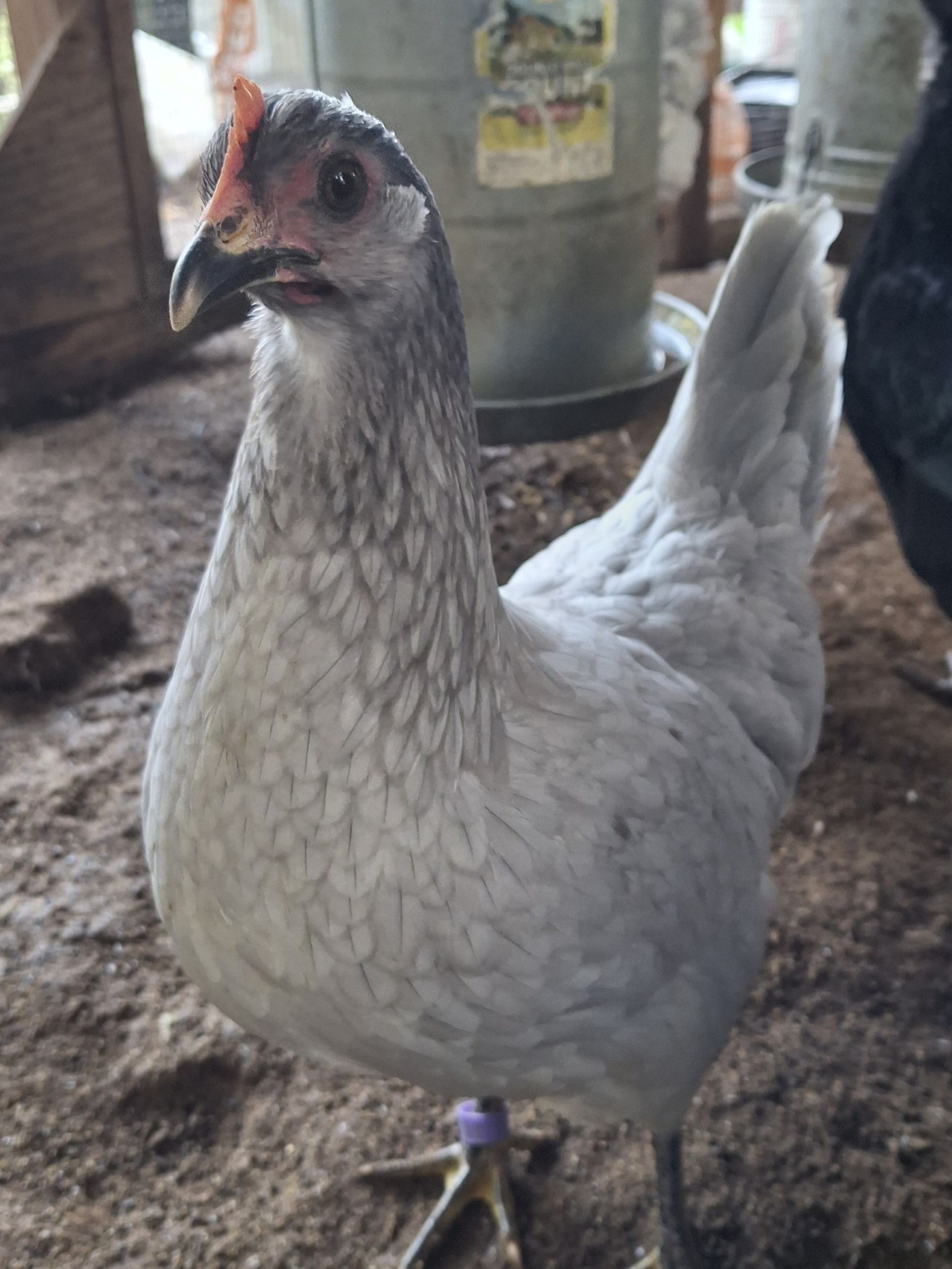
  • Choose from either Black or Lavender.
Highlights
  • By far the most popular choice.
  • Less risk, guaranteed living chicks.
  • Adorable factor is through the roof.
  • Straight run means boys and girls.
  • Need heating equipment & brooder.
  • Still very delicate and fragile.
Pricing and constraints
  • $25 per 1-2 week old chick
  • Price increases as they get older.
  • Minimum 2 chicks as they’ll die alone.
  • To support the lineage, quantity and flock discounts may be considered.
  • Choose from either Black or Lavender.
Highlights
  • Instant, guilt free, and minimal risk.
  • No waiting till next year for eggs.
  • Know exactly what you’re getting.
  • No brooder, no heater, no incubator.
  • Skips the chick experience.
  • Costs are all up-front.
Pricing and constraints
  • Price is generally 3X the chick cost.
  • Minimum of 2 – hens need friends.
  • Choices based on limited availability.
  • Prices cap regardless of age.

How do I choose?

I’m going to have a lot of opinions here, and they’re all filtering through my own personal experience. Your Miles May Vary.

The LAST choices you should make is between hatching eggs, baby chicks, or guilt-free hens.

First, think about what’s important for you right now. What makes you want chickens? And understand, the answer to this question will change significantly over time.

I’ve listed reasons below, and played a heady Devil’s Advocate for each item, hopefully calling out some things I wish someone had told me. Keep on scrolling….

What makes you want them

We all start our flocks for different reasons. I ask everyone who calls asking about chickens – What is it that you’re looking for in your flock, because being clear about that helps you become confident with your decisions. Here’s some thoughts:

Annual Egg production

The majority of us need to forget we ever saw these numbers.

Egg production is a rabbit hole and generally misleading, so keep this in mind. All statistics are made up. An annual statistic means in a perfect, controlled environment, where light and heat are consistently managed, and only for the first 12 laying months of a chicken’s life. After that, they are given a permanent rest. That number is for commercial growers to project profit and loss statements.
That means not during the heat of summer, or Autumn molt, and not during the dark of winter. Chicken bodies need breaks, and they naturally take a few each year. A chicken’s ovaries respond to stress and to day length, both of which can be manipulated.
A breed that is said to lay 150 eggs per year is most likely going to give you MORE than 2.88 eggs per week. They’ll probably still lay 4-5 eggs per week. But their internal clocks may be harder wired to take those breaks. They didn’t respond well to commercial trials.
A breed that is said to lay 250 or 300 eggs per year is most likely going to give you 5-7 eggs per week. No breed creates eggs faster than any other breed, and an egg takes just over a day to make. At some point, the clocks are going to get off-cycle, and their oviducts won’t release the next egg until their body resets. But, they may not shut down as hard or as stringent during the winter break, or be as particular on how temperature affects them.
Different chicken breeds also lay different sized eggs. 4 Jersey Giant eggs easily equal 5 leghorn or comet eggs.
And last thought – all chickens have a set number of eggs inside them. A chicken that lays more eggs faster simply gets to henopause earlier. More than 2/3 of a chicken’s potential life is spent not laying eggs, forcing you to make decisions about whether you want to keep feeding them.

If you’re willing to do what it takes to maximize feed-to-production ratios, then pay attention to egg production numbers. If not, trust that it’s going to be OK and it’ll work out in the long run.

Egg shell aesthetics

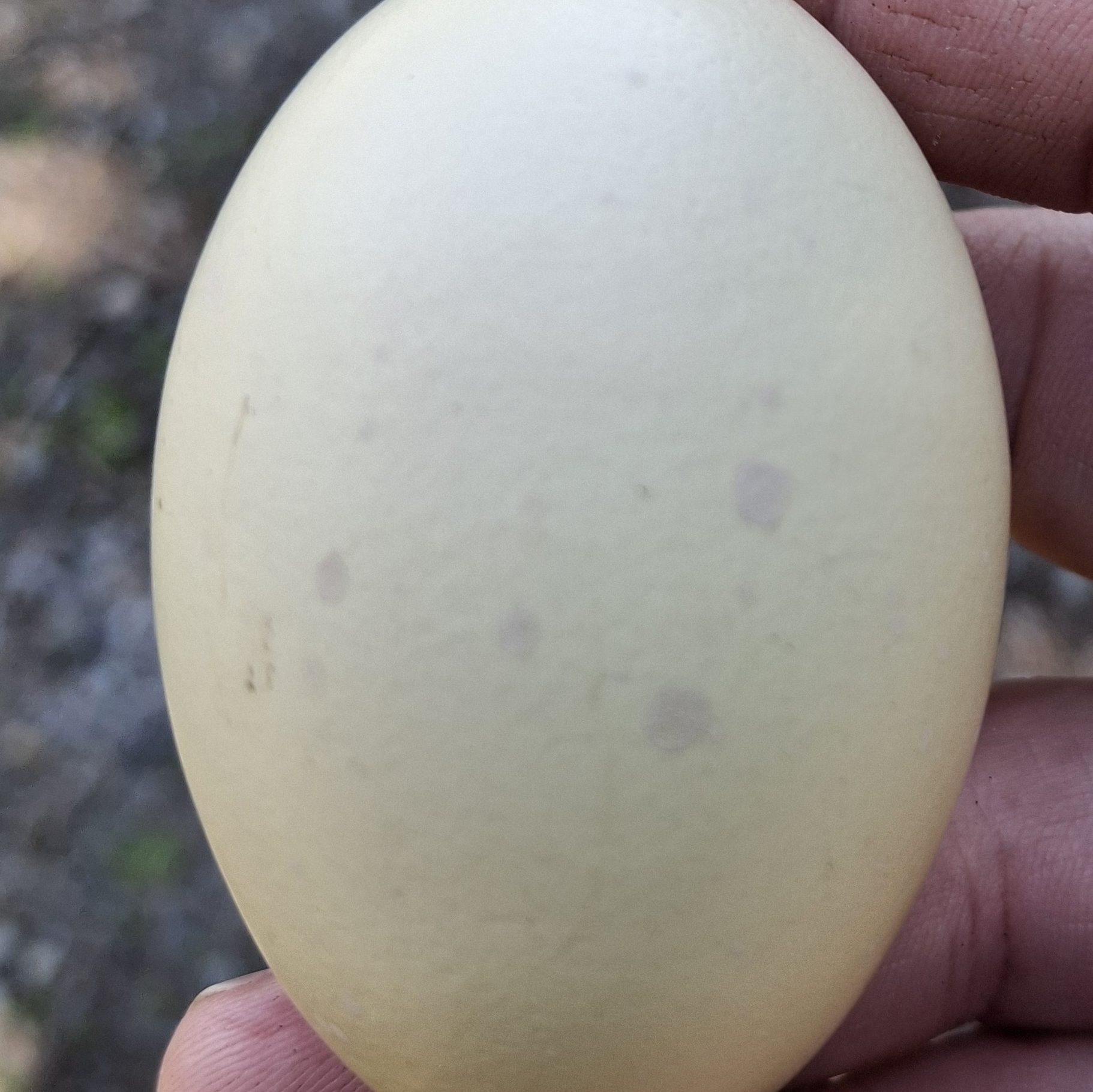
Considering my affection for green eggs, this is obviously the right answer. Congratulations!

Climate hardiness

I live in the PNW. My coop has a fully open wall, and I have no air conditioning. That being said, did I have Marans who refused to lay when it was warm? YUP. Did I have kids that needed frostbite protection for their combs and wattles? YUP. But would I choose one breed over another for it? ehh, maybe.
It does matter, although I weigh it less than I do other things, for us, here, in the PNW.
A more poignant question is what kinds of things you can do to care for all of your animals, regardless. On the hottest of days, are you willing to grab a hen and dunk her in a bucket of water (she’ll love it), or maybe go all in and install a mister in the run? Can you have some vaseline on hand to rub on those chapped wattles in the dead of winter?
Climate hardiness tells us what things to be ready for, but it’s a false hope if the idea is that you won’t have to be ready.

Behavior, Temperament and Friendliness

Of anything on this list, this one has mattered the most to me, and yet it is also the vaguest. I’ve learned that temperament can absolutely be a long-term, breed-wide trait. If even one person has a bad story about a breed, I tend to pay attention.
I’ve learned to avoid words like “lively” and “energetic”, and instead read them as “spastic with a high propensity to PTSD.” I’ve learned to like words like “foragers” because it can mean food motivated and therefore trainable. Initially, I thought I didn’t care about “foraging” because I would be feeding them.
Yet characteristics like “broody” seem to be far more about an individual than a breed-wise trait. Some girls make good mamas, and some just play at it.
The industry overuses words like “sweet and affectionate” or “docile”. What I WANT is a toddler rating system. I want to know whether even the ROOSTERS of a breed can tolerate a toddler thinking they’re a ragdoll. Not half or some of them. All of them. I want to know how many roosters, out of 100, turn into anything less than angelic after they’ve gone through 2-year old Tommy trotting them around on his tricycle. ((Tommy’s name has been changed to protect his identity, but when he grows up, he’ll know who I was talking about))

If you want a pet, you have to become the chicken whisperer. Being a prey animal, chickens thrive off PTSD. It keeps them safe. They’ll hide feeling bad or being hurt for as long as they possibly can. If they’re showing anything other than being inquisitive or casually looking for grubs, the line was crossed a while ago, and they’re already programmed to avoid that at all costs next time.

I do think that animals that are handled with more care, who are taught that you will respect their boundaries when they freak out, but also that you’re there to protect, nourish and nurture them, they mimic the same later on.

Hens-Only, auto-sexing, and sex-linking

This is a tough cookie, so bear with me, because we’re in the same boat.
What a guilt free world it would be if we could just eliminate the problem of too many roosters!!
I get it. If you and I don’t have to deal with it, that’s all that matters. And I agree! Some of us live in city limits and can’t have roosters. Others just choose not to. Even for people like me, that keep roos in our flocks, too many is anything more than I already have.
Why Nature still creates a 50/50 mix of boys and girls if a flock is only ever going to be 5-10 girls to one boy is beyond me. It seems unfair.
But, especially nowadays, do not buy into the lie that anyone can guarantee you, with 100% certainty, that they’re selling you only girls.
Auto-sexing breeds rely on down feathers, different from adult feathering, to tell whether a chick is a boy or a girl. It’s pretty good at being accurate. One has stripes and the other doesn’t. Except for when it fails. Sometimes the stripes are less apparent, or they show up on the wrong sex, or they looked one way, but then grew a little bit more and shifted. It’s 90% accurate.
Sex-linking breeds are the exact same thing, except on a hybrid bird instead of a purebred bird. Both of these work on barring gene, a chromosomal anomaly that causes chicks to appear striped like a squirrel, or to have a spot on their heads. Boys get 2 copies and appear blurry, whereas girls only get one copy and appear sharper. But because blurry and sharp are subjective, it’s still 90% accurate.
If you get to choose from the 90% accurate pooling, and know what you’re looking for, your chances go up much higher. In fact, there’s scientific studies to show that if you keep doing it, years of practice will statistically make you perfect. which brings us to vent sexing.
Vent Sexing is still practiced, but it’s also frowned upon in the retail space, both due to cost and also activism. Not so much in the industrial space tho… But they’re training AI, which will put this ALL to shame. Vent sexing is highly invasive, needing to peer INSIDE a newborn chick’s opening by, um. Don’t worry about it. It’s takes a highly trained professional, and the longer they do it, the better at it they get. Guess what? It’s STILL only guaranteed about … yup… 90% accurate.
Straight Run is what we call everything else, and what we all wish didn’t have to exist. A Straight Run means that you have to see ALL the chicks that were hatched. Nobody is hiding half of them away, and you have just as much chance of picking up a boy as you do a girl.
Unless you’re ME. If I pick from a straight run, I’ve statistically chosen boys. Why? Interestingly, it’s because I chose for personality! Prior to me hatching my own, I didn’t understand that in a straight run, boys are still boys and girls are still girls. That means boys tend to be more inquisitive, learn how to fly up high first, and always keep an eye towards the skies. Girls stay lower to the ground, out of harms way, and wait for signals that everything is safe. Now think about how that behavior plays our when a grabby hand reaches into a brooder, and you’ll quickly understand why choosing what appears to be the cutest, cuddliest, interactive one ended me with a lot of roos.
Nowadays, I can sex their genders pretty well, based on behavior alone. At least to a 90% accuracy. The first few from the clutch to figure out how to fly to the top of the brooder box get tagged as probable boys. The ones that stand up tall, get tagged. The ones that run up to me first each morning, get tagged.
Silverudds don’t have the barring gene, but they DO present with bigger combs, thicker beaks, and larger legs, beginning in week 2. If you’ve spent a long time looking at them, and you have both boys and girls to compare and contrast against, you can sex them – at least to a 90% accuracy. I STILL get it wrong sometimes. There are STILL anomalies, where a boy is a late bloomer, or (worse) a girl presents a little larger.

I hate it when I get it wrong. I don’t want to sell people future disappointment. When someone wants a flock of 5 girls, and they end up with less because one turned into a roo, that’s a long-term disappointment. Adding a new girl can quickly become dangerous if she’s not the same age as the rest of the growing flock.
Even worse, the next decision they now face, with an animal that they’ve now cared for and bonded with, is enough to squelch some people’s enthusiasm forever. Nothing about that is joyful.

Getting older birds is one of the 2 failsafe methods that I know can guarantee you past that 90% mark. The first is getting older birds. The negative is that you lose those first formative weeks and months of life.
Most breeds don’t begin presenting sexes until probably 2-3 months or so, and the “is this photo a cockrel” game is a favorite of social media. Silverudds being “early presenters” is a big deal. Even a few weeks makes a huge difference in changing the odds.
Getting double is the other failsafe method. Meaning, if you want a flock of 6, you get 12 hatchlings. The negative is that you’re also signing up to have to make that bigger decision when the time comes. Either working back with wherever you got them, if that’s an option, or finding your local poultry auction house, or gearing up yourself to take matters into your own hands.

I know this is long winded, but just one final thought, because I often have people call the farm, asking if I can take in their special boy, and biosecurity makes it a rare exception when I can. But, it helps me (a little) shifting my perspective on that animal’s life. Nature is absolutely brutal for roosters. Their purpose is to be the sacrificial meal for predators, so that the alpha and hens live on. That’s what they can hope for. In our world, it’s even worse.
The US hatches 50-100 MILLION chickens annually, just for backyard flocks. That’s not for eating, that would be billions with a B. This is just for backyard flocks. Half of those are boys, and only about 5% of them will make it past but a few months old, let alone live to a ripe old age of 7 or 8 years.

So HOW LUCKY was that little guy NOT to be part of the billions, NOT to be part of the millions that died in the first hours, NOT be part of the millions that didn’t make it past the first few weeks, but, INSTEAD, for them to have been given the beautiful life that they’ve had up till now? That’s a blessing. Maybe you can’t keep it going forever, but you kept it going as long as you did, and that’s HUGE as compared to what could have been.
As compared to all the sex-linked, autosexed, broiler, and vent-checked layers,

Your Journey begins with Your choice

Things they don’t tell you at the store, but should have

Roosters happen. Even in sex-linked and autosexing breeds, they happen. And you will have to make up your mind about what that means for you

Death happens. The biggest thing that you have to watch out for is cocci, coccidiosis.

Pecking happens. Chicks peck at things, and they will peck other chicks clean open.

Eggs break.

Chicken Math is real, and that’s OK. But poop isn’t.

One nesting box is enough.

Spacing requirements are a lie.

Free ranging doesn’t mean all day

Dusk means go home.

Roosters are awesome.
How do I determine pricing?

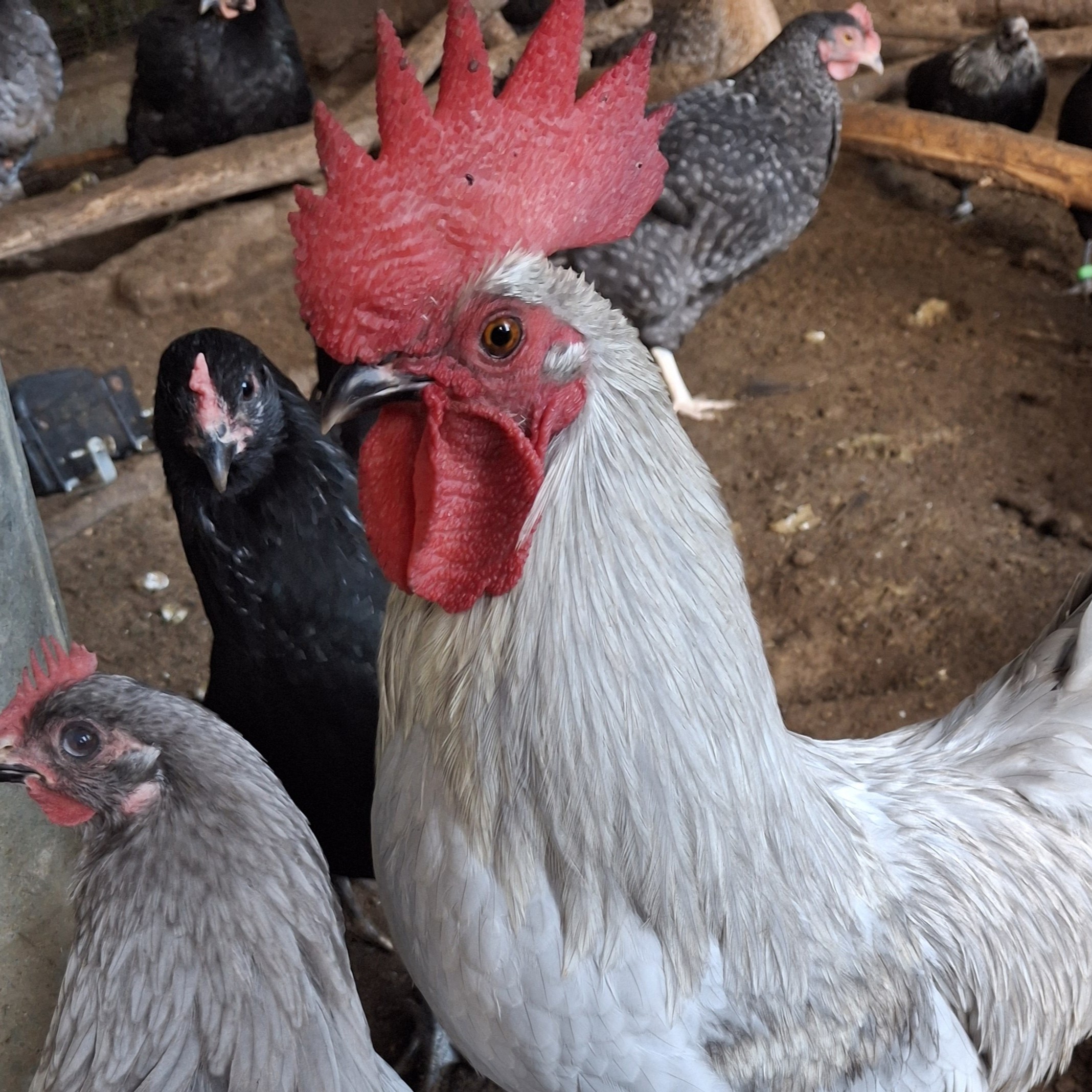
I try to find a balance between pricing high enough to respect the rarity of this breed and low enough that risking birds in the mail service isn’t necessary. I want others to raise this breed; I want there to be redundancy to my own bloodlines (should catastrophe strike); I want the young girls that don’t make the cut for MY stringent breeding program to still be loved and cherished.

But I also don’t want to continue feeding the problem. It’s far more important that we, as a community, continue the work and ameliorate the breed than it is to make a quick buck and incidentally foster future dilution, which inevitably means we lose entirely in the future.

Money shouldn’t be a barrier to the breed, but right now it is. Across the board. Quality breeders are rare and expensive. Contaminated gene pools are more and more common, and their cost of entry is lower and lower. That’s not a good combination.

This same thing recently happened to the Cemani bloodlines, which used to sell for $200 a chick, and now Cemani just means a “mostly black” chicken. That’s kind of sad.
Before that, it happened to the Marans lines, and now finding an actual dark chocolate egg in a Marans is a rarity.

Reality is – In just consumables , a single hen costs me roughly $80 annually (in 2025 prices). Equipment & maintenance more than doubles that.
Breeding takes raising a LOT of hens (and roos) that don’t make the cut once they start laying (or crowing).

Current online prices are $40/chick and $12/egg.
In 2025, they were $50 and up, so they’re coming down, but inventory is unavailable & quality is sub-par. This year (2026), the biggest breeders have invested into ensuring their animals breed true for laying green eggs (homozygous for blue-egg gene). Really, that’s the bare minimum of what we need to expect, but genetic testing gets expensive and I applaud them for doing it.

My flock tested homozygous back in 2023. I’m working on improving things the chicken community hasn’t even mentioned yet, like birchen and eye color. Lavender feather color isn’t even on anyone’s radar.

But my pricing doesn’t reflect all of that. But it reflects a portion of it. That’s what makes me believe the prices are justifiable, if not inexpensive. Even though the cost is expensive, there’s no profit in this, because I’m doing the costly work that the breed requires. That we’ll all require if future generations will get to see green eggs the way Martin wanted us to.